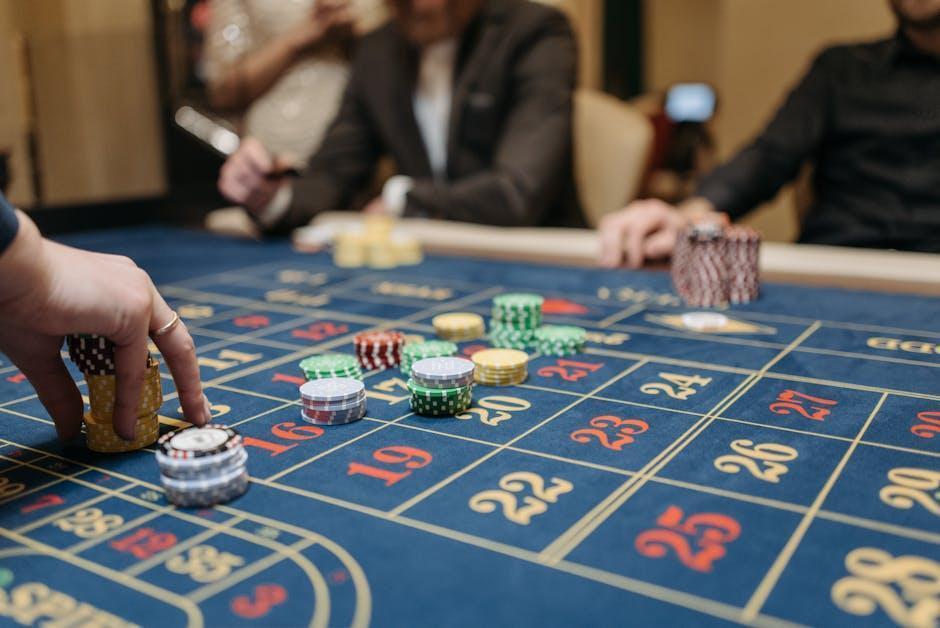

We have all been there: a string of bad luck that feels like the universe is conspiring against us, or a “hot streak” where every decision we make turns to gold. For centuries, humans have personified this phenomenon as “Lady Luck,” a mysterious force that bestows favor on some and misfortune on others. However, as we move through 2026, science and mathematics are giving us a much clearer picture of what is actually happening. What we call luck is usually a complex blend of probability, cognitive bias, and the human brain’s desperate need to find patterns in total chaos. Understanding the mechanics of randomness doesn’t just make you smarter; it changes how you experience the world.
The Brain’s Pattern Recognition Machine
The human brain is arguably the best pattern-recognition engine in the known universe. This was great for our ancestors when they needed to distinguish a predator from a rustling bush, but it is less helpful in the digital age. When we see a sequence of random events—like a coin landing on “heads” five times in a row—our brain refuses to accept that it is just a coincidence. We start to believe a “tails” is “due,” a psychological trap known as the Gambler’s Fallacy. In reality, the coin has no memory; each flip is a mathematically independent event with a fresh 50/50 chance.
In 2026, modern entertainment relies on this science to keep things fair and transparent. Trusted platforms like LuckyOnes utilize sophisticated hardware called Random Number Generators (RNGs). These systems ensure that every spin, card deal, or digital outcome is truly unpredictable and not influenced by previous results. By stripping away the “myth” of Lady Luck and replacing it with audited math, these platforms create a level playing field. Understanding that “luck” is just a high-frequency sequence of favorable probabilities allows you to enjoy the thrill of the game without the frustration of feeling “cursed” by an invisible force.
The Illusion of Control
Psychologists have found that people feel more “lucky” when they are allowed to perform a physical action, like blowing on dice or pressing a button at a specific time. Even though these actions have zero impact on the outcome, they satisfy our need for agency.
Why We Remember the “Bad Luck”
We are biologically wired for “loss aversion.” The pain of losing $20 is much stronger than the joy of winning $20. Because of this, we tend to remember the times “Lady Luck” abandoned us much more vividly than the times she stayed by our side, leading to a skewed perception of our own luck.
Breaking Down the Math of Chance
To truly understand randomness, you have to look at the numbers. Most people struggle with the concept of “Regression to the Mean,” which is the statistical tendency for an extreme event to be followed by a more average one.
|
Concept |
Definition |
Real-Life Example |
Impact on Luck Perception |
|
Independent Events |
Outcomes not linked to the past |
Roulette spins |
High (causes Fallacies) |
|
Law of Large Numbers |
Results stabilize over time |
A 1,000-toss coin experiment |
Low (requires long play) |
|
Standard Deviation |
The “swing” or volatility |
Stock market daily changes |
Very High (the “streak” feel) |
|
Clustering Illusion |
Seeing “streaks” in random data |
Seeing shapes in clouds |
High (makes “luck” feel real) |
|
True Randomness |
Outcomes with zero predictability |
Atomic decay / RNG |
Extreme (the gold standard) |
The “Lucky” Personality: Fact or Fiction?
While “Lady Luck” might be a myth, “lucky people” might actually exist—but not for the reasons you think. In 2026, researchers have identified that people who describe themselves as lucky often share specific personality traits. They tend to be more observant, open to new experiences, and less anxious. Because they are relaxed, they notice opportunities that an anxious, hyper-focused person might miss.
- The “Notice” Factor: Lucky people keep their eyes open. They might find a $20 bill on the ground simply because they aren’t staring at their phone while walking.
- Positive Expectations: Expecting a good outcome often leads to “Self-Fulfilling Prophecies.” If you think you’ll win a job interview, you act more confident, which actually increases your chances.
- The “Pivot” Skill: When something bad happens, “lucky” people tend to look for the silver lining, effectively turning “bad luck” into a learning experience.
RNG: The Heart of Modern Fairness
In the early days of the internet, people were skeptical of digital “luck.” Today, 2026’s blockchain-audited RNGs provide a “Provably Fair” system. You can actually check the math yourself to ensure the outcome was determined before you even placed your bet.
Chaos Theory and “The Butterfly Effect”
Sometimes, what we call luck is just the end result of a million tiny, invisible variables. A gust of wind, a micro-second delay in a server, or a drop in room temperature can all affect a physical or digital outcome. It’s not magic; it’s just physics that is too complex for us to track.
Embracing the Chaos of 2026
At the end of the day, “Lady Luck” is a beautiful metaphor for the unpredictability of life. While we can’t control the spin of the wheel or the cards we are dealt, we can control how we react to them. By understanding the math of randomness and the psychology of our own biases, we can step out of the shadows of superstition and into the light of strategic play. So, stop waiting for a mythical lady to smile on you—learn the odds, trust the math, and make your own luck.