
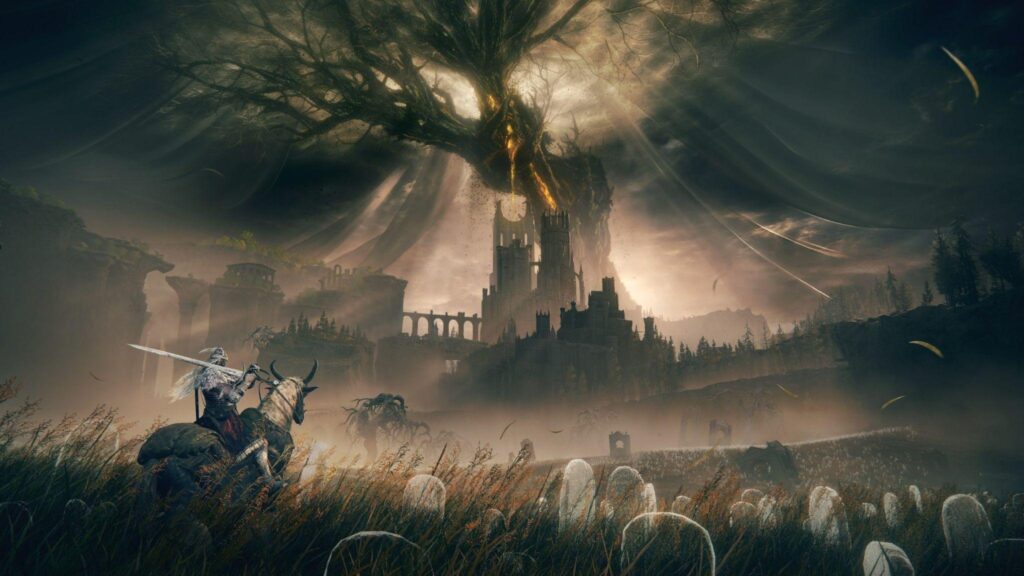
The release of the massive Shadow of the Erdtree expansion for Elden Ring caused a real storm in the gaming community on June 21, 2024. I closely followed the audience’s reaction and immediately noticed a deep divide between the ratings from the professional press and average gamers. On the Metacritic aggregator, the project started strong with a score of 95, surpassing the cult-classic Blood and Wine expansion for The Witcher 3. However, the expansion’s Steam page quickly filled with negative comments, knocking its user rating down to the 64% positive reviews mark. The main reason for the scandal was the extreme difficulty of the new enemies, which forced FromSoftware to promptly release patches.
The Contrast Between Press and Player Opinions
In the first days of the June 2024 release, a massive gap formed between press ratings and player reactions. Major publications like IGN and GameSpot almost unanimously awarded a perfect 10, praising the monumental architecture and multi-level design while ignoring some rough edges. For professional reviewers, the difficulty felt like a natural, worthy challenge.
Meanwhile, over 40,000 users tanked the project’s Steam rating, mass-complaining about broken damage balance and PC performance drops. When reading specialized articles and video game reviews online, I always look for alignment between press and player ratings, but here the gap was anomalous. Gamers were furious that even basic enemies in the starting location were two-shotting their leveled-up characters.
I believe FromSoftware simply overestimated their mainstream audience, catering exclusively to hardcore veterans who spent years mastering the base game. According to SteamDB, the expansion’s peak concurrent player count exceeded 780,000, and clearly, not everyone was ready for such strict reaction requirements. Instead of a fair initial challenge, the developers delivered a frankly artificial inflation of enemy stats.
New Leveling System and Scadutree Fragments
Developers led by Hidetaka Miyazaki added a unique Blessings mechanic that functions exclusively within the Realm of Shadow. The essence of this innovation is that your character’s old level stats partially take a back seat, and for basic survival, you need to collect special items called Scadutree Fragments. Without them, exploring new locations turns into a real torture, as the base defense of a high-level hero from the original campaign proves completely ineffective against local threats.
Observing the community’s reaction in the first days of release, I noticed a critical mistake made by the majority of users. Many gamers simply ignored exploring the starting zones and missed these vital upgrades in the first 10 hours of playthrough, trying to immediately attack story bosses. Studying a comprehensive thread on this topic, which can be found in the Reddit discussion on DLC difficulty perception, I became convinced that it was precisely the misunderstanding of how the new system works that led to mass complaints. Players went into battle with a zero level of Blessings, which is why even starting regular enemies dealt a colossal 700-800 damage to characters per single ordinary swing.
Game designer Miyazaki in a June interview with the CNET portal did not hide the motives for this decision. He stated directly that the team intentionally wanted to throw a serious challenge to players who had already leveled their heroes to level 150 and above, making them feel weak and vulnerable again. In my opinion, this radical approach ultimately worked against FromSoftware itself. By failing to provide the audience with a clear and visual tutorial on the new Shards mechanic in the very first minutes of gameplay, the developers only scared away less patient fans, turning the start of the DLC into a wall of unjustified deaths.
Unfair Bosses or a Lack of Skill?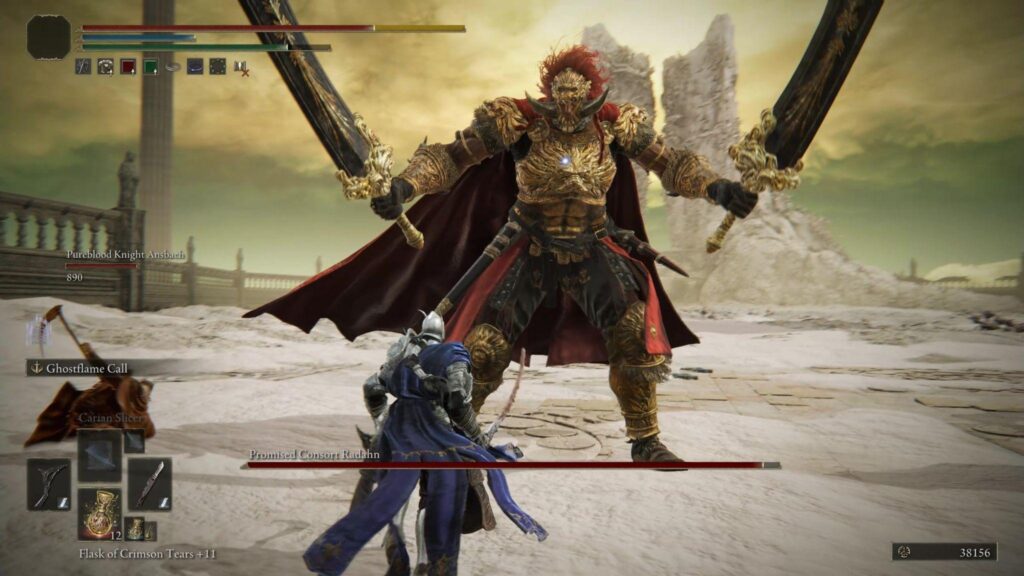
Fights with key story opponents predictably sparked massive debate within the community. Watching Twitch streams in late June 2024, I noticed that the battle with Messmer the Impaler took even experienced content creators 5 to 8 hours of grueling attempts. Attack patterns are significantly faster, damage windows have shrunk to mere seconds, and continuous enemy combos now stretch to 12-15 seconds, turning these battles into a relentless test of finger endurance rather than thoughtful tactics.
As hardcore players on forums rightfully noted, the DLC now requires memorizing dodge timings down to the millisecond, shifting the focus away from smart positioning and toward pure muscle memory. Because every minor mistake is heavily punished, heavy builds with slow two-handed weapons became practically unplayable. This effectively forced many users to abandon their favorite playstyles, relying instead on fast-striking blades or heavy shields with 100% physical damage block just to survive the onslaught.
The absolute climax of this controversial approach is the expansion’s final boss, Promised Consort Radahn, who completely crosses the line of reasonable game design. The second phase of this fight is oversaturated with visual spam from blinding holy damage, and the massive, intuitively incomprehensible hitboxes make dodging a nightmare. When a professional streamer like Kai Cenat spends over 60 hours and more than 700 attempts on a single encounter, it clearly indicates a fundamentally broken balance rather than just a lack of player skill among the average audience.
An Emergency Patch from the Developers
The developers reacted quickly to the mass criticism. On June 26, 2024, Bandai Namco urgently rolled out patch 1.12.2. Studying the official changelog, I noticed FromSoftware decided against reducing base boss damage. Instead, they significantly enhanced the early-game buffs from Scadutree Fragments, granting characters 15-20% more defense and attack power than in the original release build.
This mathematical change to the scaling curve immediately impacted gameplay. It allowed players to progress through the starting zones much more comfortably, without turning exploration into a mandatory chore of collecting every hidden item. Unlike the original June 21 build, where gamers had to avoid direct confrontations just to search for upgrades, gathering even 5-6 fragments now provided perfectly playable stats for the first serious encounters.
Following this targeted fix, community tension noticeably eased. By early July 2024, Steam data showed positive reviews steadily creeping upward, pulling the expansion out of the mixed ratings zone. FromSoftware clearly demonstrated an important precedent: even the most uncompromising game designers will promptly adjust their project under the pressure of 40,000 dissatisfied customers.
Conclusion
The situation with Shadow of the Erdtree clearly showed how difficult it is to maintain balance in a game that has sold over 25 million copies. FromSoftware tried to surprise veterans but temporarily lost touch with a more mainstream audience. In my opinion, this release will serve as a good lesson for the company’s game designers when creating future projects. Despite all the debates around the difficulty, this emotional rollercoaster and hard-fought victories remain the unique experience for which we love Miyazaki’s games.

