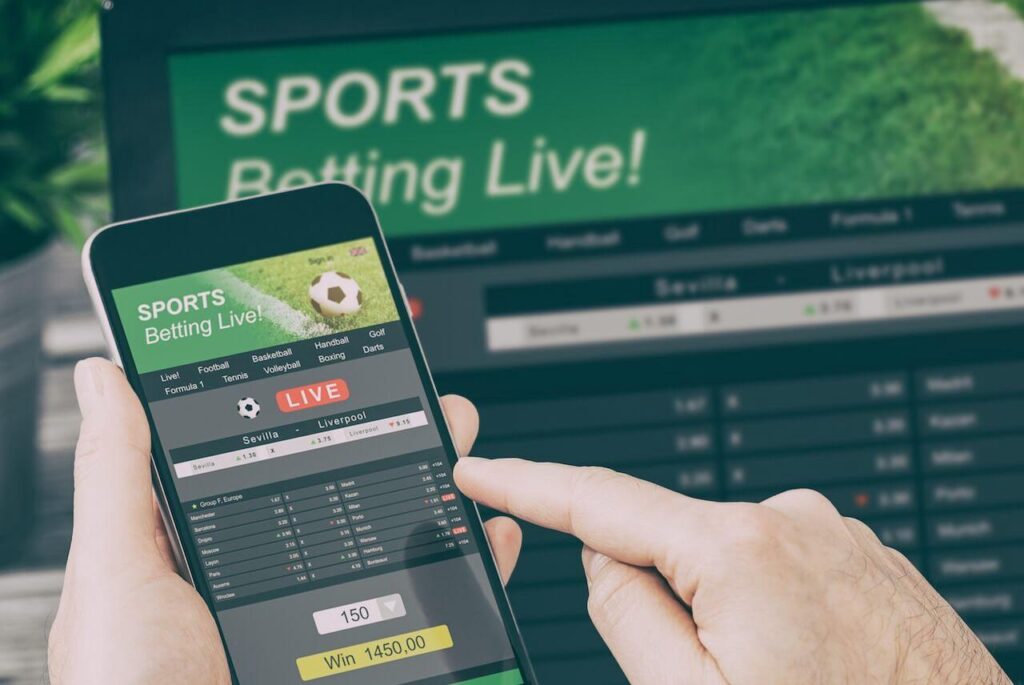
Nigeria’s online gambling revenue reached 3.86 billion US dollars, placing the country alongside the United Kingdom and Australia in global rankings that most analysts did not expect an African market to enter this decade. Approximately 60 million Nigerians place bets daily, and the broader African sports betting market surpassed 17.6 billion dollars in 2025 with over 440 million active bettors across the continent.
The Scale of What Has Been Built
Nigeria’s gambling market is now valued at 5.6 trillion naira. The industry grew without a unified national regulator for most of its expansion, which explains both its speed and its structural vulnerabilities.
Why the Numbers Grew So Fast
Mobile penetration and football culture created conditions that no single policy decision could have manufactured. The combination arrived at the same time as widespread smartphone access, and the market responded accordingly.
Key factors behind Nigeria’s betting market growth:
- Smartphone penetration reached over 50 percent of the adult population by 2024
- Football viewership in Nigeria ranks among the highest globally per capita
- Mobile payment infrastructure made deposits and withdrawals accessible without a bank account
- Young population with median age of 18 years drives digital adoption faster than most markets
How Betting Markets Actually Work
Understanding the mechanics behind odds is the first step toward making informed decisions. Most platforms in Nigeria operate on a margin model that is worth understanding before placing a single wager.
What every bettor should know before placing a first bet:
- Bookmaker margins on major football markets typically range from 4 to 8 percent
- Posted odds always reflect a probability lower than the true statistical chance of any outcome
- Higher odds do not mean better value unless the implied probability is genuinely underestimated
- Accumulator bets multiply the bookmaker margin with each added selection
How Odds Are Structured
Bookmakers build a margin into every market, typically between 4 and 8 percent on major football matches. This means the true probability of any outcome is higher than what the posted odds imply, which is the structural advantage the operator holds.
Bankroll Management as a Starting Point
According to Oddsportal’s 2026 bankroll management guide, disciplined bettors allocate between 1 and 2 percent of their total bankroll per bet as a standard unit. Exceeding that threshold consistently is the single most common reason recreational bettors exhaust their funds within a short period.
Principles of responsible bankroll management:
- Set a fixed total bankroll separate from personal finances
- Limit each single bet to 1 to 2 percent of that total
- Record every bet placed, including stake, odds and result
- Review performance monthly rather than after each session
- Adjust unit size only when the bankroll changes significantly
Value Betting Explained
A value bet exists when the probability implied by the odds is lower than the bettor’s own assessed probability of that outcome occurring. Identifying value consistently over hundreds of bets is what separates systematic approaches from guesswork.
How Technology Is Changing the Betting Experience
The gap between placing a bet and receiving a result has compressed dramatically over the past three years. Real-time data feeds, AI-driven odds engines and mobile-first design have restructured what bettors can do during a match, not just before it.
Live Betting and Why It Grows Faster Than Pre-Match
Live betting is currently growing three times faster than pre-game wagering, according to 2026 industry trend reports. Odds update mid-possession on player-specific markets, and platforms now process latency in milliseconds rather than seconds, which changes the decision window available to the bettor.
AI Algorithms Behind the Odds
Bookmakers use AI-driven dynamic pricing that adjusts odds in real time based on live data feeds including injury reports, in-game statistics and market volume. Tools such as Rithmm, OddsTrader and Leans.ai are now available on the bettor side as well, giving users access to probability models that previously existed only within operator infrastructure.
|
AI Tool |
Primary Use |
Available To |
|
Rithmm |
Player performance modelling |
Bettors |
|
OddsTrader |
Odds comparison and line movement |
Bettors |
|
Leans.ai |
Probability prediction assistant |
Bettors |
|
Operator pricing engines |
Dynamic in-play odds adjustment |
Bookmakers only |
Cash Out and Its Strategic Role
Cash out functionality allows bettors to settle a bet before the event concludes, either locking in a partial profit or limiting a loss. The feature introduced a layer of decision-making that did not exist in traditional fixed-odds betting, and its correct use requires the same probabilistic thinking as the original stake.
Technologies now standard on leading betting platforms:
- Real-time odds updates driven by live data feeds
- AI personalisation that adjusts market suggestions by user history
- Early cash out on both single bets and accumulators
- In-play statistics overlaid on live match visualisations
- Instant mobile payment processing for deposits and withdrawals
The Regulatory Context in Nigeria
Nigeria currently operates without a single unified betting regulator. Individual states issue licences independently, which creates a fragmented legal landscape where standards vary significantly between operators.
|
Regulatory Feature |
Current Status in Nigeria |
|
National unified regulator |
Not established |
|
State-level licensing |
Active across multiple states |
|
Consumer protection rules |
Varies by operator |
|
Responsible gambling mandates |
Inconsistently enforced |
What Platforms Are Available and How They Differ
Bet9ja remains the market leader in Nigeria by active user volume. Lemon Casino represents a different category of operator, focused on casino products rather than sports markets, and publishes its bonus terms, RTP figures and withdrawal conditions directly on its platform pages. Transparency of this kind has become a baseline expectation for Nigerian users who have experienced less forthcoming operators.
The main criteria Nigerian bettors use when selecting a platform:
- Withdrawal speed and minimum limits
- Availability of local payment methods
- Odds competitiveness on Nigerian football leagues
- Bonus terms with clearly stated wagering conditions
- Customer support response time in local hours
The African Market in Comparative Perspective
Regulated markets generate up to 85 percent of Africa’s total iGaming revenue, according to SiGMA’s Africa Market Report. South Africa leads with 4.3 billion dollars in gross gaming revenue, followed by Nigeria at 3.63 billion dollars.
|
Country |
GGR |
Active Bettors |
|
South Africa |
4.3 billion USD |
Not disclosed |
|
Nigeria |
3.63 billion USD |
60 million |
|
Kenya |
Growing market |
Active |
|
Ghana |
Growing market |
Active |
Conclusion
Nigeria’s sports betting market is the product of structural economic conditions, mobile infrastructure and a football culture that generates genuine engagement with outcomes. The 3.86 billion dollar revenue figure is not a ceiling. According to 6W Research projections, the Nigerian internet sports betting market is expected to continue growing through 2031, with regulatory consolidation representing the single largest variable that will determine whether that growth produces durable value for both operators and consumers.