Casinos aren’t built on luck—they’re built on math. The glittering lights, free drinks, and exciting atmosphere mask a simple truth: casinos operate on precise mathematical principles that ensure their profitability over time. In 2023, the global casino industry generated approximately $261.8 billion in revenue. This staggering figure didn’t happen by chance.
Every casino game is carefully designed with a built-in mathematical advantage known as the “house edge.” This percentage represents the casino’s average profit from each player’s bet over time. The same mathematical principles apply across both land-based and online platforms, including modern online casinos such as betfm casino.
But does this mathematical certainty mean it’s impossible to win? Not exactly. The house edge works over thousands or millions of bets—not individual sessions. This creates a fascinating tension between short-term possibility and long-term probability.
Breaking Down the House Edge Across Popular Games
Understanding the house edge for different games helps explain why casinos like Norsk Tipping NO remain profitable despite occasional big winners. Let’s examine the mathematical disadvantage players face across popular casino offerings:
| Game | House Edge | Player’s Odds | Average Return Rate | Volatility Level |
| Blackjack (basic strategy) | 0.5-1% | 48-49.5% | 98-99.5% | Medium |
| European Roulette | 2.7% | 48.6% | 97.3% | High |
| American Roulette | 5.26% | 47.4% | 94.74% | High |
| Slots (typical) | 5-15% | 85-95% | 85-95% | Very High |
| Baccarat (banker bet) | 1.06% | 49.3% | 98.94% | Low |
| Craps (pass line) | 1.41% | 49.3% | 98.59% | Medium |
| Video Poker (optimal play) | 0.5-3% | 97-99.5% | 97-99.5% | Medium |
| Keno | 20-40% | 60-80% | 60-80% | Extreme |
As this data shows, games with the lowest house edge offer players the best mathematical chance of winning in a given session. However, even these “favorable” games maintain a consistent advantage for the casino when played over time.
Can Strategy Overcome Math?
Many gamblers believe they can beat the house edge through various strategies. Let’s examine the most popular approaches:
Card Counting in Blackjack
Card counting is perhaps the most famous casino-beating strategy. By tracking the ratio of high to low cards remaining in the deck, skilled counters can identify situations where the odds temporarily shift in their favor. When the deck is rich in 10s and Aces, counters increase their bets.
Does it work? Yes, with significant caveats:
- Card counting can reduce the house edge to zero or even create a player advantage of 1-2% under ideal conditions
- It requires extensive practice and concentration
- Casinos actively work to prevent counting through shuffling, surveillance, and even banning successful counters
- The advantage is typically small (1-1.5%), requiring substantial bankroll to weather variance
In 2019, a team of card counters from MIT was estimated to have won approximately $57.6 million over two decades—proof that the strategy can work, but also an indication of the exceptional skill and resources required.
Advantage Play in Other Games
Beyond blackjack, opportunities for advantage play exist but are increasingly rare:
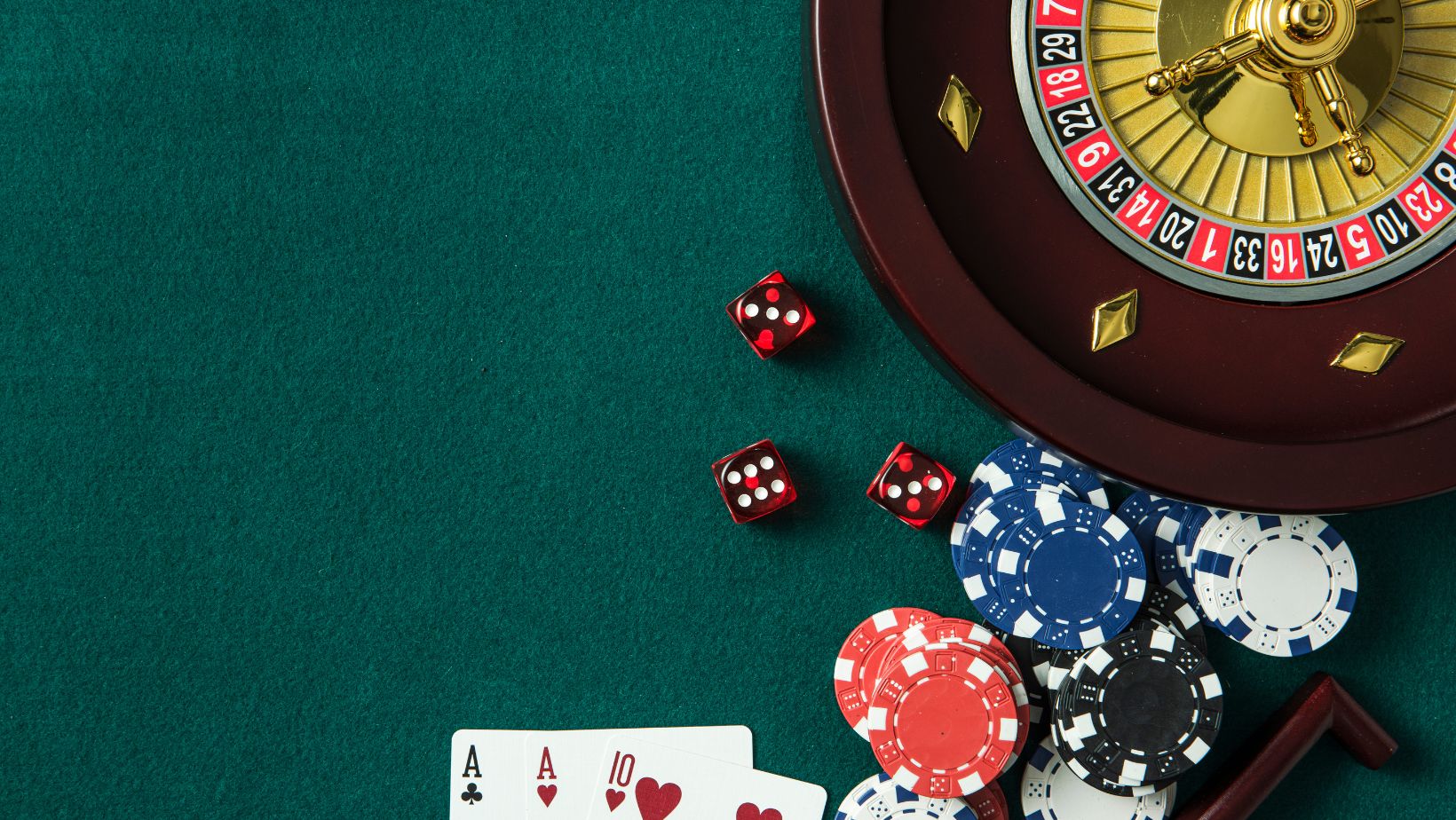
- Wheel bias detection: In the 1970s, Joseph Jagger famously exploited biased roulette wheels in Monte Carlo, winning today’s equivalent of $6.3 million. Modern casinos now use sophisticated equipment and regular testing to eliminate such biases.
- Hole carding: Observing dealers’ hole cards in games like blackjack or Three Card Poker can create player advantages of 5-13%, but casinos train dealers specifically to prevent this and may ban players caught using this technique.
- Progressive betting systems: The Martingale system (doubling bets after losses) and its variations cannot overcome the house edge mathematically. Despite their popularity, these systems eventually encounter table limits or bankroll constraints.
Law of Large Numbers: Casino’s Ultimate Advantage
The mathematical principle that most reliably protects casinos is the Law of Large Numbers. This statistical concept guarantees that as the number of bets increases, the actual results will converge toward the expected mathematical outcome.
For example, in a single spin of American roulette, a player betting on red has a 47.4% chance of winning—nearly even odds. However, over 100,000 spins, the casino can be virtually certain that their 5.26% advantage will manifest as profit.
Furthermore, casinos benefit from another mathematical reality: variance. A player with a $1,000 bankroll facing a 1% house edge might easily double their money in a lucky session. However, the casino, with its millions in reserves, can absorb such variance easily while waiting for mathematics to prevail.
Is There Any Hope for Players?
Despite the mathematical barriers, players aren’t entirely without options:
- Focus on skill-based elements: Games like blackjack and video poker reward proper strategy with lower house edges (often below 1%)
- Utilize comps and promotions: Casino loyalty programs return approximately 0.1-0.3% of theoretical losses through comps, effectively reducing the house edge
- Set strict loss limits: The longer you play, the more certainly the house edge grinds down your bankroll
- Recognize gambling as entertainment: Viewing losses as the cost of entertainment rather than a path to profit creates a healthier relationship with casino games
Final Calculation
Can you beat the math behind casinos? In isolated sessions, absolutely. In specific games with the right conditions and exceptional skill, some players maintain long-term advantages. However, for the overwhelming majority of gamblers, the mathematical principles underlying casino operations ensure that prolonged play results in losses.
The casino industry’s continued growth—projected to reach $287.4 billion globally by 2027—testifies to the resilience of their business model. While stories of big winners capture our imagination, it’s the relentless reliability of probability that builds casino empires.
Therefore, approach casinos with open eyes: enjoy the excitement, employ smart strategies to minimize disadvantages, but recognize that for most players, the question isn’t if the math will catch up, but when.